Raised Glasses, Steady Hands: A Recovery Guide to Wedding Season
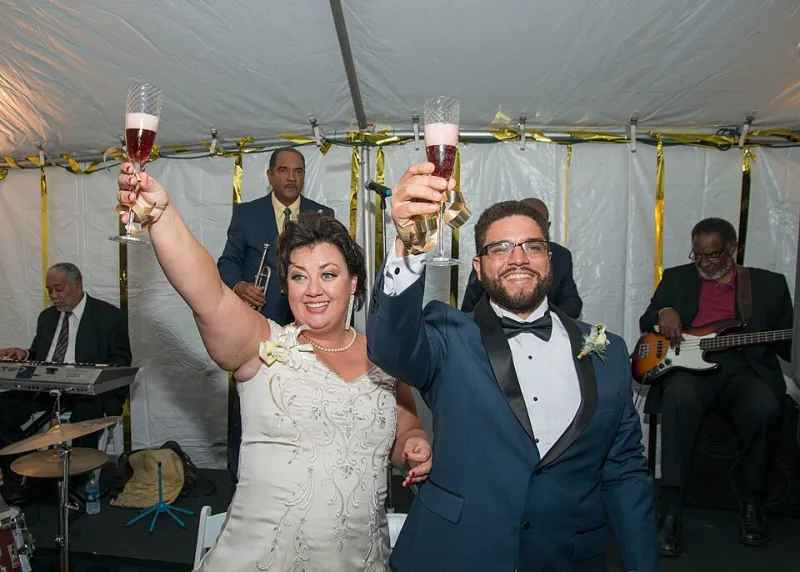
Photo: Charles Mims, CC BY 2.0, via Wikimedia Commons
Between May and October, Americans attend roughly 2.4 million weddings, and nearly every one of them is built around a ritual that has nothing to do with the couple: the drink. Champagne pours during photos, a signature cocktail named after the bride, a best man's toast that ends with 'bottoms up.' For the estimated 20 million-plus Americans in recovery from substance use disorder, those four months can feel less like a season of love and more like a season of ambush.
The good news is that weddings are survivable — even enjoyable — in recovery. It takes planning, a few rehearsed lines, and an honest conversation or two. Here's how to walk into the next reception with your sobriety intact.
Decide Before You Arrive
The single most important decision happens before you put on the suit or dress: whether you will attend at all, and if so, under what conditions. Recovery professionals often advise people in early sobriety to skip events where drinking is the centerpiece, and that guidance is worth taking seriously. A black-tie reception in month two is a different animal than a cousin's afternoon ceremony in month fourteen.
If you do go, go with structure. Drive yourself or ride with a sober friend so you can leave when you need to. Arrive a little late and leave a little early — the hours when the bar is busiest. Identify the quietest room in the venue as your retreat spot. And tell at least one person at the event that you don't drink. A single ally turns a lonely evening into a managed one.
Scripts for the Toast You're Handed
Being asked to give a toast as a groomsman or maid of honor puts you in front of a crowd with a glass in every hand. You do not need to explain your medical history to pull it off. A few lines that work in real life:
- The simple decline: "I'm driving tonight, but I'd love a sparkling water for the toast." Most people stop asking after one answer.
- The gracious redirect: "I'm not drinking these days, but I'm absolutely raising this glass." Confidence closes the conversation faster than apology does.
- The brief honesty: "I'm a couple of years sober, so I'll toast with the bubbly water." Said evenly, this earns respect far more often than it earns questions.
If you're giving the toast itself, hold a full glass of something nonalcoholic the entire time. A full glass ends the refill conversation before it starts.
Telling the Wedding Party
If you're standing up in the wedding, the couple has enough stress without surprises. A short, direct conversation a few weeks out — "I want you to know I'm in recovery, so I'll be sticking to soda at the reception; I'm excited either way" — prevents awkward moments at the rehearsal dinner and gives them a chance to support you. Most couples respond with relief, not judgment. Some will even stock your favorite NA drink without being asked.
The Rise of the Dry Wedding
Attitudes are shifting. Surveys from The Knot and other industry trackers show a steady climb in couples choosing alcohol-free celebrations — driven by budget, religion, family history, and increasingly, by guests and wedding parties who simply don't drink. The zero-proof beverage industry, now a multi-billion-dollar market, has made it easier than ever: venues that once offered only soda now pour nonalcoholic sparkling wines and craft mocktails.
If you're planning your own wedding in recovery, you have more leverage than any guest ever will. Some couples keep alcohol for guests but skip it at the head table. Others go fully dry and lean into a coffee bar, a mocktail hour, or a dessert station as the celebratory anchor. There is no rule that a wedding must serve liquor, and vendors in most major markets have adapted.
When the Venue Assumes Everyone Drinks
The friction usually comes not from guests but from the industry itself. Catering contracts often bundle a bar package by default, and coordinators may push back on a dry event as 'less festive.' A few practical moves:
- Ask explicitly for an alcohol-free package; most venues have one even if it isn't listed.
- If you're a guest, call ahead or check the couple's wedding website — many now note the bar situation.
- Build a nonalcoholic drink into your hand the moment you arrive. An empty hand invites an offer; a full one doesn't.
- Have an exit line ready: "This was beautiful — I've got an early morning." Leaving early is a recovery skill, not a social failure.
One Evening Does Not Define the Season
If you do slip at a wedding — and some people do — the worst response is the belief that the whole season is lost. Reach out to your sponsor, your group, or a treatment professional the next day, not next month. Recovery is rebuilt one decision at a time, including the decision made in a hotel room the morning after.
Wedding season will come and go. The toast lasts thirty seconds. What you're protecting — your health, your relationships, your future — lasts a lifetime. Raise the sparkling water. Stay for the cake. Go home proud.